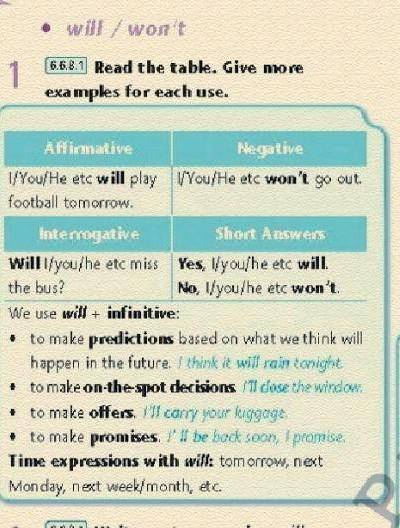
• will / won't T 16681 Read the table. Give more examples for each use. Affirmative Negative I/You/He etc will play I/You/He ete won't go out. football tomorrow Interrogative Short Answers Will I you/he etc miss Yes, I/you/he etc will the bust No, l/you/he etc won't. We use will * Infinitive: • to make predictions based on what we think will happen in the future. I think it will rain tonight to make on the spot decisions. I'll close the window. to make offers. I'll carry your luggage to make promises. I'll be back soon, I promise Time expressions with will: tomorrow, next Monday, next week/month, etc.
We will have to see it I will go to the cinema tomorrow I will sing a song on Friday I will write an essay. I will tell you later they will call you back in a minute she will pay for your breakfast he will take care of your brother they will watch a tv show she will buy a new dress we won't have to see it they won't call you back in a minute she won't buy a new dress they won't watch a tv show he won't take care of your brother she won't pay for your breakfast I won't tell you later I won't write an essey I won't sing a song on Friday I won't go to the cinema tomorrow will they call you back in a minute? will she pay for your breakfast? will we have to see it? will they watch a tv show? will he take care of your brother? will she buy a new dress? will i wrote an essey? will i sing a song on Friday? will I tell you later? will I go to the cinema tomorrow?
To be:Полноценный смысловой глагол «быть, существовать, находиться»: He is at home. - Он (находится) дома. 2. Выступает в роли глагола-связки (т.е. связывает подлежащее с другими членами предложения): I am not happy with your behaviour. – Я недовольна твоим поведением. 3. В роли вс глагола (auxiliary verb) для выражения длительного аспекта (continuous aspect): She is cooking dinner. - Она готовит обед. 4. В качестве модального глагола, для выражения намерения, должествования, предопределения: I am to go home. -Мне пора идти домой. He is to be a great warrior. - Ему предстоит быть великим воином.
0,0(0 оценок)
Полный доступ
Позволит учиться лучше и быстрее. Неограниченный доступ к базе и ответам от экспертов и ai-bota
Оформи подписку