







We use the first conditional when we talk about future situations we believe are real or possible.
If it doesn't rain tomorrow, we'll go to the beach.
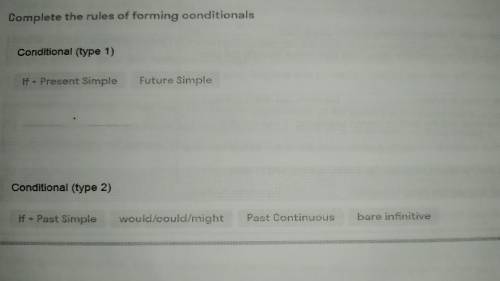
In first conditional sentences, the structure is usually: if/when + present simple >> will + infinitive.
It is also common to use this structure with unless, as long as, as soon as or in case instead of if.
I'll leave as soon as the babysitter arrives.
The second conditional is used to imagine present or future situations that are impossible or unlikely in reality.
If we had a garden, we could have a cat.
I wouldn't worry if I were you.
The structure is usually: if + past simple >> + would + infinitive.
When if is followed by the verb be, it is grammatically correct to say if I were, if he were, if she were and if it were. However, it is also common to hear these structures with was, especially in the he/she form.
If I were you, I wouldn't mention it.